
He stole a kiss from her. It was never his intent. She brushed against him in a narrow corridor and triggered something. Against the order and better judgment of the director a rogue agent in his brain carried out the desperate assassination. Grazing her temple with the radioactive kiss he was swept away in a nostalgic sweetness, the agent at the same moment biting down on a poison capsule, a stream of panic and guilt flushing through his veins, then dropped stiff and lifeless, a foolish afterthought to a lost cause.
A Radio Head song bobbed to the surface in his head.
‘But I’m a creep
I’m a weirdo.
What the hell am I doing here?
I don’t belong here.’
Her name was Edie and she was home from college for the holidays and back working at the store. Her return woke a hibernating pang in him, her face conjuring both promise and abject loss. He had fallen for her the moment he saw her three years ago while she was still in high school. He honestly never thought she was that young, thought she might be in her mid twenties, an assessment admittedly made with a mental filter of certain color and gauziness. If she had been in her twenties he was still old enough to be her father and the chasm between them greater than years. They were totally mismatched. He took a perverse solace in knowing that even if they were the same age they could never be together, different animals as they were. It was that polarity that drew him to her, that and delusion born of a runaway romanticism and not feeling his true age. The chronology of his years seemed all wrong. His whole life he had felt out of step with his peers, lagging behind not mentally or physically yet in some essential way. As a child he had always felt more at ease with others younger than himself, his playmates all being years his junior. He remembered his father’s alliterative disgust at the juvenile company he kept,
“Goddamn big goof gallivanting around with those little kids!”
This pattern continued through high school, in college where he lived in a house with younger roommates and now at work where most of his associates were half his age. He imagined even death would not break this pattern, finding him resting eternally between those born decades after him. Throughout his life he never felt his age or really grown up. It was a common enough flaw in men – arrested development, the Peter Pan syndrome. But he was not like most men and that was indeed a good part of his problem. While from the start he clung stubbornly to his youth there was also borne in him a preternatural solemness discerned by both child and adult alike who encountered him. There was about him an aura of sadness and resignation beyond his years, even at the age of seven, a cowled fatalism over the russet crew cut.
He had aged well, the fortuitous genes of his mother keeping at least a decade at bay, belying his age. Carded well in to his thirties, that youthfulness had now receded. There were some lines in his face; a question of elasticity of flesh or lack thereof. His hair was thinning and slightly graying. He remembered going to barbers as a child, each invariably stopping to flex their aching fingers.
“Young man, you’ll never go bald.” they had all said, reaching in the drawer for a fresh pair of scissors and going back to work, the sharp beaked, silver heron fluttering and diving in and out of his auburn hair, fashioning a nest of perfect symmetry.
Now he wanted to find those same barbers. He would do an internet search:
‘Lying bastard barbers’
He would find out where they lived. They would be old men now, their hands arthritic and palsied. They would shuffle to the door, gingerly opening it, all those years of shearing leaving the instruments of their past livelihood no longer able to grasp. He would be waiting to confront them on their guile and deceit, lies casually tossed off their barber sheets with a snap of the wrist, strands of fabrication floating down to gather at their feet. True, he was not bald but where there once was a dense raspberry thicket there was now only autumn wheat. He would make them weep for their lies, daubing away tears with their crooked claws.
Then he would find those that were dead. Death would not shield them. He would find their grave and take a lawn mower out from the trunk of his car. It would be one of those antique jobs, the ones you had to push yourself, sunflower yellow with maw intent and deadly as a stalking cat. He would adjust the curled blade so that it lay low and heavy, almost resting on the sward beneath. Then he would begin his toil of revenge. Mowing each grave, straining against the mower as it cut the grass to the quick. It would be the closest shave the bastards had ever seen. The cemetery workers would halt their labor to watch, one make at stopping the desecration but seeing the furious abstract of his face think better of it, walking off with foreign appall. When finished he would stand back admiring his work, the grave now a dirty brown scab on the cemetery’s marble stubbed face. The little grass remaining would yellow and wither, never to grow again, even the worms fleeing the cursed patch, their meal gone bitter.
On keening for a girl half his age he knew the crowd’s money would be on a mid life crisis. But this was faulty logic; his life having never taken any true form therefore had no discernible midway point. In his mind the seed of romance had simply split open and now unfurling, inched its way up to the warmth of possibilities. When she smiled at him he was corporeal again, his senses giddy in their resurrection. It was only later that he realized she smiled at everyone. She was one of those impossibly open and friendly people. At least it seemed impossible to him. He was stiff and uncomfortable around people, furtive as a coyote in Harlem. One of the few personal relationships he had at work was with a young guy from Grocery. He was at a loss as to how their unlikely camaraderie even came about but somehow it worked, the young black man’s natural strut and brashness playing against his own quiet reserve, the stuff of great comedy teams or scientific collaboration. His co-workers would describe him as closed off and unfriendly, one dimensional and without qualities and in all honesty he could find no quarrel with the verdict.
He was a cipher, remote as a nebula. His interaction with them was uncolored by personality, his few social pleasantries rote. It was not a matter of conceit or that he felt superior though many thought as much. The cruel irony of the shy or socially inept is that they are often seen as considering themselves above everything while in truth they are within everything.
There were people he worked with for years whose names were unknown to him, never said hi to. Sometimes it was an animal thing where he took a visceral disliking to the person or vice versa, a chemical interaction producing a mutual repellent. In most cases it was his stubborn refusal to say hello first. Over the years he had come to see a definite pattern. It was always left to him to be the first one to say hi. It did not matter if he was the new arrival or they were, it was expected he make the first overture. This would be a non issue for most people but he viewed it as an inequity and finally made up his mind to never again initiate a greeting. This left him with only a small pool of acquaintances and still fewer friends. The resulting isolation would have been justification enough to end the social experiment for most but the truth was he was content in his solitude. Unlike many he felt no loneliness though perhaps he was in denial, a denial deep as the grave, as a ghost unable to accept death walks the same old places in confusion. He did however miss having that one special person in his life. Christ! He sounded like that now dead movie announcer known as ‘The voice of god.’ who had seemingly introduced every film trailer over the last few decades. The preview in this instance was an epic of bathos. He vowed to immediately to search out a third rail to piss on should he ever catch himself uttering the phrase ‘Soul Mate’.
He briefly entertained the idea Edie might have felt a charge of excitement from his kiss, aroused by his reckless vault over propriety or from her indulgence in a daddy complex, piquant and redolent of guilt. Then in his mind a Prussian officer abruptly interrupted this thought, removed a glove embroidered with the letter R and slapped his face with it, a stinging reproach to such nonsense: R is for reality…revile.
Edie thought he was a creep or at least he believed she did. How could she not with what had happened? He had made the first transgression in her eyes a few years earlier. One day he had found himself in an office with Edie and the store manager. While the manager muttered aloud about upcoming sales and busied herself with signage he caught Edie’s gaze, locking it within his deep set eyes. It was a look completely inappropriate and utterly at odds with the stark, anchored mundaneness of the fluorescent lit room. In that moment the light seemingly telescoped inward to a humming pinpoint, rushing to usher them both through a padlocked door he had no key to. He felt his face burn red, his head filled with a white heat buzz of cicadas. Did she hear them too? He wanted desperately to hold her tightly and feel her face seep in to his chest, mingling with the white noise that dissolved the entire office. It was a fleeting moment of permanence. From that day on things were different between them.
In that foolish moment he had wanted to convey the feelings of his heart and failed miserably. Instead she only perceived lust and the lecherous encroachment of middle age. There was lust to be sure but something even far more powerful was at work – romance. That enthralling and doomed battle field called to him time and again only to cut him down and resurrect him, a starry eyed zombie. Romance had been a lifelong well spring of errant hope and despondency. It was what had made him write poetry years ago. He had a small collection and thought of writing a poem for Edie. But he learned long ago poetry could not transform him in her eyes and had the queasy feeling she would only read it as a stalker’s letter of intent. There was so much wrong with his thought process when it came to relationships. Without one meaningful conversation between them he had attempted a feat of high magic, the convergence of their souls. He had thought to erect a cathedral, instead managing only a stone grotesque of his ardor – squat and mute, without even a ledge to perch it on. This was his pathology. How could he possibly believe there could be anything between them when he was a stranger to her? In his twisted logic he sought to first pierce her with a golden arrow, a look from which he assumed conversation and oneness would be a given offshoot. The natural evolution in any relationship is establishing communication, building a solid foundation of mutual interests and values. This paradigm was lost to him, the act of small talk a swamp that mired his words and thoughts. It was oddly easier for him to make a grand, utterly inappropriate gesture.
Thinking about Edie, about being with her, he found himself often muttering to himself, “You’re insane”. They say you cannot be truly insane if you think you are. But one could be aware of clinging to a shade of sanity, embracing the maiden figure head of a ghost ship, dangling above the churning, black maelstrom, an embrace insubstantial and dissolving as sea mist. When he forced himself to consciously step back from it he could see the utter madness of it all. True, there were couples with twenty years or more age difference between them. He remembered reading that Charlie Chaplin had married an eighteen year old Oona O’Neil at the age of fifty four and J.D. Salinger had lifelong dalliances with women decades younger. But such men were almost always rich, famous or both and the women often highly evolved carrion feeders. He was neither rich nor famous and she was a vegan.
He tried to picture the two of them having dinner with her parents both who must surely be his own age and it made him sick. Hanging out with her friends was easier to envision though he could still imagine the crap she would take. His heart however overrode these misgivings, bronco busting reason, digging in the time worn spur of love conquering all. Where did love fit in all this? It did not need to be love; it could just be the pleasure of their shared company. He wanted to go to book stores with her, hike the countryside and camp out under the moon and cedars, watch films and take her dancing. He knew he could hold his own with any twenty year old in the club. But could she take any delight in his middle aged body? It was a mess! He should just walk away from it, wanted to walk away from it. How could he possibly turn away from it? The truth is he embraced the ache of unrequited love as only a failed romantic could. The incessant throb of pain making him feel more alive than the beating of his heart ever could. It was the elixir of youth, calling up in him the bitter sweet taste of things unrealized.
Over the last few months he had made a conscious effort to lose weight and managed to shed thirty pounds. He ran five miles, five days a week, conjuring up the ghost of the skinny youth that haunted his ribs. It was his ritual attempt to stave off decay. He ran on an empty stomach sometimes not having eaten for twelve hours. And while this was completely contrary to prevailing health advice it was natural for him. He ran in an arboretum, over pebbled roads and winding, hilly trails. He would run and feel the emptiness in his belly spread like a burning meadow, the fire gradually subsiding to a manageable smolder. There was fallen angel stoicism to his hunger.
He ran in all seasons, the weather holding no sway in his regimen. The winter was tough but in ways preferable to the summer. In the summer when the temperature and humidity were high he found himself easily winded and sweated profusely, ending the run looking as if he had just woken from a fevered night’s sleep in a salt marsh. To make matter worse he wore headphones, the equivalent of ear muffs in August. He could feel the effect it had on his pace, his legs seeming to drag a ball and chain that accumulated the slick, waxy detritus of the day with each step. Not that even on the best days could he be considered a sprinter. When it was dry and crisp out he could cut six or seven minutes off of his time. But in general he was more of a pacer. He ran like a man who knows death runs behind him, closing the gap with each step yet not caring, only looking to give the inevitable finish a contrivance of suspense.
What he lacked in speed he made up for in agility, having an uncanny sense of balance, the physical product of a flat existence. The course he ran had stretches of rough and uneven terrain and though not the type of arduous trail running one usually envisions of gullies, peaks and jagged rocks, it did provide constant small challenges. In the spring there were puddles of water and mud, causing him to slip and slide or grasping him in full stride, his feet sucked into the muck. There were tree roots rising like sea serpents, their humps breaking the surface of earth, threatening to fell him. Summer brought veils of mosquitoes harboring fever and other phantom pests. A grassy rotary circled through a marshy part of the arboretum, the grass grown wild and high. It was a regular part of his run and later one night he discovered something lurking in the tall grass had pierced through the mesh of his running shoe and bitten him on his middle toe. Starting out like a mosquito bite it grew larger and began to weep viscously. He went to the doctor whose best guess was a spider bite of some sort and was prescribed a topical steroid which cleared it up though a year later a faint red circle still remained. From then on he made it a point of spraying his shoes with insect repellent.
Autumn dropped her raiment and walked naked in to the arms of winter, leaving behind vines, branches and slick mats of wet leaves that invited pratfalls, fat pine cone grenades waiting to explode beneath his bad ankle. Winter had snow and ice, their treachery nonchalant and obvious. During a thaw it was especially hazardous, the ice on the path partially melted, left a veneer of water on the surface, a devious construct for breaking bones. That he was able to navigate these obstacles day in and day out was a testament to his being surefooted, more so considering his right ankle had been suspect for decades, remnant of a bad sprain from his college years.
Now it was mid winter and the earth hard and brittle under his feet. The temperature was in the low twenties with a jagged wind. As was his preference he was under-dressed for the weather. He enjoyed the cold’s painful affirmation of life. His thoughts turned to Edie and in his mind he tried to forge instruments that could capture her heart or if not, excise her from his own. His breath came out in steamy clouds, his heart an athanor that worked to change leaden desire to gold. Alone in the arboretum as it was too cold for most, the song,’ You, You, You.’ by the 69’s played on his head phones. She, she, she was in his head. He ran past a young swan floating in the river that he had watched grow up from the time it was born the previous spring. Now almost a year later, apart from its parents and siblings, old enough to forage on its own, its feathers were still tinged a hatch-ling gray. Summer would bring a snowy maturity. The apricity at his back cast forth a long shadow, the bitter run as much a flagellation of his soul as it was exercise for his body. A group of swans floated by, an enclave of white bishops choosing to ignore his penitence. A miserable cur, he would never attain their purity.
The run took him through a green corridor of Rhododendrons growing over twelve feet high, the cold making their leaves hang in folds like a stage curtain. Hunger induced lightheadedness combined with the frigid wind and low sun darting through the bare branches made him hallucinate. He thought he saw hunched figures in the stasis of tall brown rushes, the late afternoon light now at eye level flickered madly between the branches as he ran causing a strobe like effect that hinted at seizure. Heavy and impotent, the mid winter sun sank in to the frozen ground as his burning hunger rose, the breast plate of his solitude cold and rigid over his blazing heart, his heart that burned for Edie.
One day there was a blizzard and with the snow up to his ankles, he ran in a slow, choppy, caribou motion. The virgin snowfall, wet and heavy took its toll with broken tree limbs and hunched bushes along the path he now christened. Dormant branches bare just the other day now bore the fruit of winter, great white brains, the entire woods now bent in pensive, icy thought.
Exerting himself, his breath becoming labored, he wondered if he was courting a heart attack. A year ago he would not have been able to do this, even at twenty he would probably have faltered. But months of running had built up his endurance, of his heart who could say? Still, there was no better place to die, there in the snowy woods. Ahead, the Rhododendron path was as cold and closed to him as Edie’s heart. The bushes on either side of the path stooped in snow, their branches interlaced and arthritic as the hands of a praying nun. He made his way slowly, the branches clawing at the wires of his head phones which now played Sigur Ros’ Track 6. If his life had a sound track then it was just a series of numbered tracks, comprised of simple progressions and chord changes, sometimes catchy or moving but in the end all sounding alike. The timing of this song playing just now was inspired. For a moment he had thought of turning back but then the song came on. It made him think of Aguirre’s fool errand, the mad conquistador pressing through a grave and alien landscape while his daughter floated high in a litter above him, an aubade in a sunless place. He was in the habit of watching Werner Herzog films all night long. There was a lack of passion in his life.
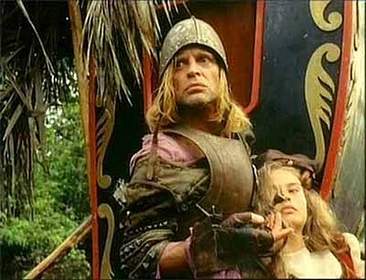
He pushed aside the shrubbery’s cold and brittle weight, in places dropping almost to his knees, forced to duck under knotted branches until he reached the final last few feet of the path where it met a roughly hewn wooden stairs built by the arboretum staff. Here the Rhododendrons made their final stand, the hedges on either side of the path hunkered down in brilliant white armor. The weight of the snow made it impossible for him to push them aside and they hugged the ground tightly so that there was no way beneath. It was then that the song swelled in conclusion, synthesizers tolling the bells of a besieged cathedral. With one last effort, he grabbed the branches and lifted them above his head, shaking the arteries of that implacable heart, rending them of their inconsolable weight. Clumps of snow rained on his head and down the inside of his shirt, the transparent blood of winter leaving him wet and cold streaked. It was a ridiculous act in the face adversity, comical and infinitesimally heroic.
His passion for Edie made him a mute animal, prey to her countenance, her long brown hair and dark eyes.. He had always been tyrannized by the figures of beauty. He had neither the gift of small talk nor the ease to flirt. The distance between them was heartbreaking to contemplate, like the diminishing silhouette of a ship on the horizon is to the marooned. He went out of his way to avoid her when he knew she was working as much for her sake as his own. The logistical part of keeping away from her was fairly easy. She worked at the coffee bar and apart from when she went on a break she was limited to that area of the store. He made it a point of taking the long way around the store in order to avoid contact with her like the junkie who in trying to get off the stuff takes the long way home, knowing the high his body craves is just around the corner, acutely out of sight. At times, hearing others mention her in passing he would feel a hypodermic twinge, her name a talisman, its utterance, a voodoo piercing of his heart.
Now when they encountered each other their discomfort was palpable. One day his young black friend insisted on buying him a cup of coffee. He knew Edie was working and he had spent the day as usual making sure to avoid her. But the young man was insistent and ushered him to the coffee bar.
Edie was talking with her older sister Emily, brilliant and beautiful in her own right who also worked at the store. From both their expressions and the abrupt halt in conversation it was obvious she had been given the low down on him. With a burning sheepishness he placed his coffee order, receiving a double shot of icy stares. In time he was eventually able to get Edie to exchange hellos, albeit tacit and reserved. Encountering him, her face which normally beamed would take on a look of consternation, a resignation to awkwardness. It was not in her nature to hate while loathing came easy to him.
He was intoxicated by young women, the corruption of years having not yet set forth. A study determined that a female’s allure peaked at the age of nineteen. He hated that one of the few things he shared in common with society at large was an obsession with physical beauty, branding him shallow and trite. Yet beauty and age alone did not account for the desire he felt for Edie as many of the women at the store were as young with their own special beauty but he had no passion for them. There was something intangible that drew him to her, something he was unable to dissect as much as it was his inclination. He hated his shallowness, wishing he was not a pawn to beauty. But that was like imagining his breath not rising and falling in rhythm to the pulse of fireflies in his head as he lay dreaming at night.
Edie had a wondrous body. Her breasts, he could not bring himself to call them tits, were magnificent and the curves of her petite body seemed carved out of air. The paleness of her flesh was a rebuke to this age of bronze, her beauty curling like pure white smoke above the garish orange side show of corruption and rust. He had heard that she had a tattoo somewhere on her torso but would never get to see it, having a better chance of uncovering ‘Leda’, Michelangelo’s lost painting.
He made it a point of never looking directly at her but instead from that field of vision, that corner of the eye where phantoms are seen and took great pains to stay out of her range as though looking directly at her might sear the retina of his soul. To look at her fully and openly was to finally cast him as what he loathed to be, Quasimodo to her Esmeralda carrying on his back a swollen knot of years, strange and grotesque in his longing.
He knew that after she graduated college Edie would no longer come back to work at the store and he would fade in her memory, a cut out figure in a mental diorama. Perhaps that is why he foolishly kissed her, risking further alienation. If he could not win her heart then perhaps at least her lasting antipathy, needing to stand out in her life in some way if only in a negative light and not recede in to the deepening shadows of her past. It was better than meaning nothing to her. It would have to suffice. He also knew that in five or six years she would be married and have children. She would no doubt dismiss the notion but the actuaries in their sterile buildings like bars of random access memory, knew better. Thinking further on it, he remembered reading that people were now getting married later in life than their parents had. Alright, they would give her nine years, adjusting their monitors and graphs. She would marry but it would not be to her current boy friend and the one she would eventually marry would not remain her husband. He would look her up as an old man; find her living in the Australian outback having taken on an accent from Oz, an accoutrement to her natural charms. There with another husband they would raise sheep purely out of love. She would have beautiful children that she home schooled. Her life would be as bounteous as his meaningless. Things would be fine for her. This is what he thought.
He wanted to talk with her while she was half drunk, in some pre- prohibition bar on the lower east side, a place far older than even him. Out in the crowded world he was reticent and invisible by choice. From experience he knew he performed better under pressure, one on one, surprisingly shining when put on the spot and made to hold up his end of the conversation. They would sit across from each other in a booth of dark wood seasoned by tears, vomit and laughter spilled beer, the measured breath of resting heads in drunken stupor. In that benched coffin of dreams, furies and broken secrets his eyes would take her in, listening intently to her half slurred words fall like the patter of rain. The juke box yearning,
‘I was just guessing at figures and numbers, pulling the puzzle apart.’
He would ask her all the things he had ever wanted to, savoring her every intonation. He would watch as she absently played with her dark hair, tilted her head quizzically, her eyes going softly in and out of focus, gaze in silent envy as her finger traced the side of her glass, then lifting it to her lips, emptied it. Last call – he would open the door for her, the heavy summer air cast upon them pungent and sweet as they were netted by the night. A lemon sherbet moon would hang huge and low over the skyline.
Looking back, neither would recall who took the others hand. She would lean against him, attuned to his heartbeat as they walked and for the first time in a very long while he would feel whole. The bars would be closing, the evicted loitering about, indulging in histrionics, smoking and laughing while the two of them were enshrined in immaculate silence. They would come upon a yellow balloon caught in the branch of a small tree, an animal exotic to the night and snared by its ribbon tail. She would unravel it from the branch only to have a gust of wind snatch it from her, making her let out a tiny gasp, the edge of the ribbon cutting her finger. She would stand there sucking on the wound, crimson juice flowing on white as the balloon floated away. They would watch it, the color of the palest daffodil, rise into the yawning moon until neither was discernible from the other. At the same time he would watch Edie from the corner of his eye. There being no phantoms, he would turn fully to her, taking her hand and press the cherry wound to his mouth. This is what he felt.
 Spring, Summer and Laudanum